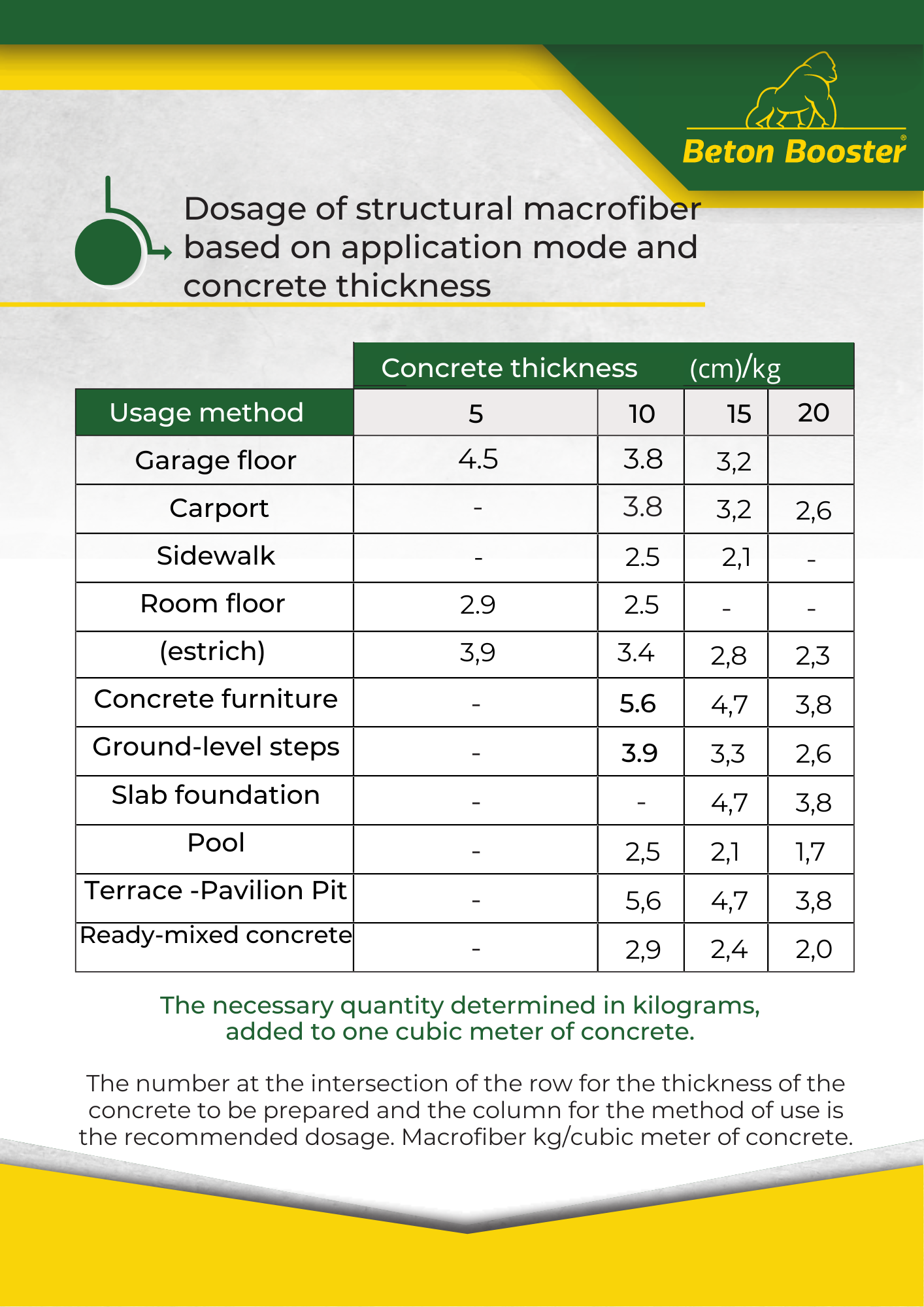


The dosage of ArmoTec structural macro fiber should always be calculated based on the amount of concrete. It is not enough to know how many square meters you want to concrete, because the required fiber quantity is also strongly influenced by the thickness of the concrete.
The same surface area requires a completely different amount of concrete at a thickness of 10 cm, 12 cm, 15 cm or 20 cm. This is why ArmoTec dosage is calculated per cubic meter.
In this guide, we will show you step by step how to calculate the required amount of ArmoTec. First, we determine the surface area to be concreted, then the thickness of the concrete, and then we calculate the volume of concrete. After that, the required amount of ArmoTec macro fiber can be determined.
If you do not want to calculate manually, you can also use the ArmoTec dosage calculator, which calculates the required quantity after entering a few details.
What does ArmoTec dosage mean?
ArmoTec dosage shows how many kilograms of structural macro fiber need to be added to one cubic meter of concrete.
This is why the dosage is not given in square meters, but in kilograms per cubic meter.
For example:
3 kg/m³ means that 3 kg of ArmoTec macro fiber is required for 1 cubic meter of concrete.
4 kg/m³ means that 4 kg of ArmoTec macro fiber is required for 1 cubic meter of concrete.
This is important because concrete does not work as a flat surface, but as a material with volume. The thickness of the concrete is just as much a part of the calculation as its length and width.
For example, a 20 m² terrace requires a different amount of concrete at a thickness of 10 cm than at a thickness of 15 cm. If we only look at the square meters, we can easily calculate the wrong dosage.
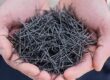
The role of ArmoTec structural macro fiber is to spread throughout the concrete and help reduce cracking and distribute loads. According to the product page, ArmoTec can replace welded wire mesh in concrete applications where the main role of the mesh is to help prevent cracks and distribute loads. Such applications may include driveways, screed concrete, sidewalks, terraces or other concrete surfaces lying on the ground.
Why is the dosage calculated per cubic meter of concrete?
The amount of ArmoTec must be calculated per cubic meter because the fibers need to be distributed throughout the full cross-section of the concrete. They do not work only in the upper part of the concrete, but throughout the entire concrete layer.
The amount of concrete is made up of three values:
length × width × thickness
This gives us the volume of concrete in cubic meters.
Let’s take a simple example.
If we concrete a 20 m² surface at a thickness of 10 cm, the amount of concrete is:
20 m² × 0.10 m = 2 m³ of concrete
If we concrete the same 20 m² surface at a thickness of 15 cm, the amount of concrete is:
20 m² × 0.15 m = 3 m³ of concrete
The surface area is the same, but the amount of concrete is 1 cubic meter more. This also changes the amount of ArmoTec required.
For example, if we calculate with a dosage of 3 kg/m³:
2 m³ of concrete requires 6 kg of ArmoTec.
3 m³ of concrete requires 9 kg of ArmoTec.
However, it is also important to take into account that in the case of greater concrete thickness, the recommended dosage may generally be slightly lower, because a thicker concrete layer in itself provides better load distribution.
This is why it is not enough to ask, “How many square meters does 1 kg of ArmoTec cover?” The right question is what amount of concrete and what thickness we want to calculate the dosage for.
Step 1: calculating the surface area to be concreted
The first step is to calculate the surface area to be concreted.
To do this, multiply the length by the width.
Formula:
length × width = surface area
Example:
5 m × 4 m = 20 m²
In this case, the surface area to be concreted is 20 square meters.
If the surface is a regular rectangle or square, the calculation is simple. If the area consists of several parts, it is worth calculating each part separately and then adding them together.
For example:
first part: 5 m × 4 m = 20 m²
second part: 3 m × 2 m = 6 m²
total surface area: 20 m² + 6 m² = 26 m²
After this, we can move on to determining the concrete thickness, because to calculate the required amount of concrete, we need to know not only the surface area but also the thickness of the concrete.
Step 2: determining the concrete thickness
The next step is to determine the thickness of the concrete. This is important because the required amount of concrete is determined not only by the size of the surface area, but also by the thickness of the concrete.
For outdoor concreting, as a general rule, it is not advisable to go below a thickness of 10 cm. Outdoor concrete is exposed to greater stress: rain, frost, temperature changes, ground movement and regular loads can all affect it. If the concrete is too thin, it can crack, break or sink more easily.
For indoor screed concrete, the situation is different. The thickness of screed concrete usually ranges from 35 mm to 8 cm. The exact thickness depends on the floor structure, whether there is thermal insulation, underfloor heating, impact sound insulation underneath it, and what type of flooring will be installed on top.
Common concrete thicknesses:
Indoor screed concrete: from 35 mm to 8 cm
Outdoor sidewalk, garden path, terrace: at least 10 cm
Driveway, garage floor: usually 10–12 cm
Industrial floor: usually 15–25 cm
The thickness of the concrete should always be matched to the expected load. A pedestrian sidewalk, a driveway used by passenger cars and an industrial floor loaded by forklifts do not require the same structure.
To calculate the ArmoTec dosage, it is necessary to know the exact concrete thickness, because this gives us the volume of concrete. The same surface area means less concrete at a thickness of 10 cm than at 15 or 20 cm.
For example:
20 m² × 0.10 m = 2 m³ of concrete
20 m² × 0.15 m = 3 m³ of concrete
20 m² × 0.20 m = 4 m³ of concrete
It is clear that on the same surface area, increasing the concrete thickness significantly increases the required amount of concrete. This directly affects the amount of ArmoTec as well.
Step 3: calculating the amount of concrete in cubic meters
Once we know the size of the surface area to be concreted and the thickness of the concrete, we can calculate the amount of concrete.
The formula is simple:
surface area × concrete thickness = amount of concrete
It is important that the concrete thickness must be given in meters.
This means:
10 cm = 0.10 m
12 cm = 0.12 m
15 cm = 0.15 m
20 cm = 0.20 m
Let’s look at an example.
We want to concrete a 30 m² driveway at a thickness of 12 cm.
The calculation:
30 m² × 0.12 m = 3.6 m³ of concrete
In this case, the amount of ArmoTec must be calculated for 3.6 cubic meters of concrete.
Another example:
A 50 m² industrial floor is being made at a thickness of 18 cm.
The calculation:
50 m² × 0.18 m = 9 m³ of concrete
Here we are already talking about 9 cubic meters of concrete, so the amount of ArmoTec also needs to be adjusted to this.
This step is very important because many calculation errors happen when someone only takes the square meters into account and does not calculate with the thickness of the concrete. However, macro fiber dosage is always linked to the volume of concrete.
Step 4: choosing the right ArmoTec dosage
After calculating the amount of concrete, the right ArmoTec dosage must be selected.
The dosage shows how many kilograms of ArmoTec structural macro fiber are required for 1 cubic meter of concrete.
The exact dosage depends on the intended use of the concrete, the expected load, the thickness of the concrete and also the technical requirements the finished concrete must meet.
As a general guide, the following dosages can be used:
For concrete surfaces with lighter loads: 2.5 kg/m³
For general screed concrete, terraces and sidewalks: 3 kg/m³
For driveways, garage floors and surfaces loaded by passenger cars: 4 kg/m³
For higher loads, workshops, stables and industrial-type applications: 5–6 kg/m³ or based on individual technical design
The dosage should not be chosen randomly. If too little fiber is added to the concrete, the concrete may not provide the effect expected from it. If an unnecessarily large amount of fiber is used, the material cost increases and the concrete may also become more difficult to work with.
The simplest solution is to use the ArmoTec dosage calculator. Based on a few details, the calculator helps determine how much ArmoTec macro fiber is needed for the given concrete work.
The ArmoTec dosage calculator is available here:
https://betonbooster.com/calculator/
A downloadable dosage table is also available to help determine the quantity quickly:
https://betonbooster.com/wp-content/uploads/2024/07/Dosage-ofArmoTec-macrofiber.png
If we calculate manually, then in the next step the amount of concrete must be multiplied by the selected dosage. This gives us the required amount of ArmoTec in kilograms.
Step 5: calculating the required amount of ArmoTec
Once we know the amount of concrete and have selected the right dosage, we can calculate how many kilograms of ArmoTec macro fiber will be needed.
The formula is simple:
amount of concrete × dosage = required amount of ArmoTec
For example:
2 m³ of concrete × 3 kg/m³ = 6 kg of ArmoTec
This means that if we calculate with a dosage of 3 kg/m³ for 2 cubic meters of concrete, then a total of 6 kg of ArmoTec macro fiber is required.
Let’s look at another example.
A driveway requires 3.6 m³ of concrete. The selected dosage is 4 kg/m³.
The calculation:
3.6 m³ × 4 kg/m³ = 14.4 kg of ArmoTec
In this case, 14.4 kg of ArmoTec is required. In practice, it is worth rounding up, because due to packaging, mixing and on-site conditions, it is better to have a small reserve.
If ArmoTec comes in 1 kg packaging, then in the example above, 15 kg of ArmoTec macro fiber will be needed.
It is important to always work with the full amount of concrete during the calculation. If several separate concreting sections are being made, the concrete quantity of each section can be calculated separately and then added together at the end.
For example:
first part: 2 m³ of concrete × 3 kg/m³ = 6 kg of ArmoTec
second part: 1.5 m³ of concrete × 4 kg/m³ = 6 kg of ArmoTec
total: 12 kg of ArmoTec
This can be useful if not every concrete surface will receive the same load. For example, a lower dosage may be enough for a sidewalk, while a higher dosage is needed for a driveway or garage floor.
Calculation examples for common concreting jobs
The following examples help explain how ArmoTec dosage calculation works in practice.
Example 1: outdoor sidewalk
The surface area to be concreted is 10 m².
The concrete thickness is 10 cm.
The dosage is 3 kg/m³.
First, we calculate the amount of concrete:
10 m² × 0.10 m = 1 m³ of concrete
Then we calculate the amount of ArmoTec:
1 m³ × 3 kg/m³ = 3 kg of ArmoTec
So, this sidewalk requires 3 kg of ArmoTec macro fiber.
Example 2: terrace
The surface area to be concreted is 25 m².
The concrete thickness is 10 cm.
The dosage is 3 kg/m³.
The amount of concrete:
25 m² × 0.10 m = 2.5 m³ of concrete
The amount of ArmoTec:
2.5 m³ × 3 kg/m³ = 7.5 kg of ArmoTec
In practice, 8 kg of ArmoTec macro fiber should be calculated for this.
Example 3: driveway
The surface area to be concreted is 30 m².
The concrete thickness is 12 cm.
The dosage is 4 kg/m³.
The amount of concrete:
30 m² × 0.12 m = 3.6 m³ of concrete
The amount of ArmoTec:
3.6 m³ × 4 kg/m³ = 14.4 kg of ArmoTec
In practice, 15 kg of ArmoTec macro fiber will be needed for this.
Example 4: garage floor
The surface area to be concreted is 24 m².
The concrete thickness is 12 cm.
The dosage is 4 kg/m³.
The amount of concrete:
24 m² × 0.12 m = 2.88 m³ of concrete
The amount of ArmoTec:
2.88 m³ × 4 kg/m³ = 11.52 kg of ArmoTec
In practice, 12 kg of ArmoTec macro fiber should be calculated for this.
Example 5: industrial floor
The surface area to be concreted is 100 m².
The concrete thickness is 18 cm.
The dosage is 5 kg/m³.
The amount of concrete:
100 m² × 0.18 m = 18 m³ of concrete
The amount of ArmoTec:
18 m³ × 5 kg/m³ = 90 kg of ArmoTec
For industrial floors, the final dosage should always be adjusted to the expected load, the concrete quality, the subgrade and the technical requirements. In case of higher loads, it is worth requesting individual design.
Can ArmoTec replace welded wire mesh?
With the right dosage, ArmoTec structural macro fiber can replace traditional welded wire mesh in many cases, but not in every concreting situation.
The most important difference is what type of structure we are talking about.
For concrete surfaces lying on the ground, ArmoTec can be a good alternative to welded wire mesh. Such applications may include:
- sidewalk,
- terrace,
- driveway,
- garage floor,
- screed concrete,
- paved concrete surface,
- workshop floor,
- industrial floor,
- agricultural concrete surface.
In these structures, welded wire mesh often does not work as the main load-bearing reinforcement, but rather plays a role in crack control and load distribution. ArmoTec macro fiber performs this task not in a single plane, but throughout the full cross-section of the concrete.
Welded wire mesh is usually placed at a certain height within the concrete. If it moves during construction, sinks or is not properly supported, it will not work where it should. ArmoTec, on the other hand, is mixed throughout the entire concrete mass, so it is distributed three-dimensionally within the concrete.
This can be especially useful for concrete surfaces where the goal is easier construction, faster work and reduced cracking.
However, it is important that ArmoTec does not replace steel reinforcement in every case.
In slabs, beams, columns, walls and other load-bearing structures, reinforcement cannot simply be replaced with macro fiber. These structures require structural design, and the role of reinforcement is different from its role in a ground-supported concrete slab.
Simply put:
for ground-supported concrete slabs, ArmoTec can replace welded wire mesh in many cases,
but in load-bearing structures, it is not an automatic substitute for reinforcement.
That is why in every case it is necessary to check what kind of concrete surface we are talking about, what load it will receive and what technical requirements it must meet.
What happens if the ArmoTec dosage is too low?
The effect of ArmoTec largely depends on whether the right amount is added to the concrete. If too little macro fiber is added, the fibers cannot be distributed densely and evenly enough in the concrete.
In this case, the concrete does contain macro fiber, but the expected technical effect may be weaker.
Too low a dosage may result in:
insufficient crack-reducing effect,
weaker load distribution in the concrete,
the replacement of welded wire mesh not being a safe solution,
the finished concrete not providing the performance expected from ArmoTec.
This is especially important when ArmoTec is used to replace welded wire mesh. The manufacturer’s product page also highlights that using less than the recommended dosage significantly reduces effectiveness. According to the product page, a dosage of 1–2 kg/m³ is not sufficient for a structural macro fiber to reliably replace welded wire mesh.
Simply put: if less ArmoTec than required is added to the concrete, the problem is not with the ArmoTec technology, but with the fact that the concrete did not receive enough fiber.
This is similar to saving on part of the cement in the concrete. At first it may seem cheaper, but the final result will be weaker.
This is why it is not worth saving on the dosage. The correct quantity should always be determined based on the amount of concrete, its thickness, the load and the intended use.
What happens if the ArmoTec dosage is too high?
Too high a dosage is not always a good solution either. More macro fiber does not automatically mean proportionally better concrete.
If an unnecessarily large amount of ArmoTec is added to the concrete, the material cost increases, while the performance of the concrete may not improve in proportion. The goal is not to add as much fiber as possible to the concrete, but to use the right amount.
With too high a dosage, the concrete can also become more difficult to work with. Fiber-reinforced concrete behaves differently from traditional concrete. The more fiber is added, the more important proper mixing, the right concrete mix design and good execution become.
Possible consequences of too high a dosage:
- unnecessarily high material cost,
- more difficult mixing,
- more difficult placement,
- less comfortable surface finishing,
- uneven fiber distribution in case of poor mixing.
This does not mean that a higher dosage is bad. For higher-load surfaces, workshops, stables or industrial floors, a higher dosage may be necessary. In such cases, however, the fiber quantity should not be increased randomly, but adjusted to the expected load and technical requirements.
So the right dosage is neither the lowest nor the highest value. The right dosage is the one that matches the given concreting task.
How should ArmoTec macro fiber be mixed correctly into concrete?
ArmoTec can work well when the macro fibers are evenly distributed throughout the full mass of the concrete. This is important because the fibers do not need to work in one point or one plane, but throughout the full cross-section of the concrete.
One of the advantages of ArmoTec is precisely that it provides three-dimensional, or 3D, reinforcement to concrete. Traditional welded wire mesh is placed at a certain height inside the concrete, while ArmoTec is mixed into the full amount of concrete. The product page also highlights this among its advantages: ArmoTec provides 3D reinforcement, is easy to handle, enables faster construction, does not corrode and is much easier to transport than welded wire mesh.
The goal of correct mixing is simple: the fibers should not be present in clumps, but should be evenly distributed throughout the concrete.
In ready-mix plant mixing, ArmoTec should be added to the mixer and then mixed for a sufficient time so that the fibers are evenly distributed. The same goal applies to on-site mixing: the material should not be thrown into the concrete all at once in one large lump, but added in a way that allows the mixer to distribute it properly.
Important practical rules:
the macro fiber must always be mixed into the concrete, not worked into the finished surface afterward,
the fibers must be evenly distributed in the mix,
mixing should continue until no clumping is visible,
concrete that is too dry and difficult to mix can make even distribution harder,
when placing the concrete, it is important to keep in mind that the surface of fiber-reinforced concrete may behave slightly differently from traditional concrete.
Using ArmoTec is not complicated, but attention must be paid to mixing. For a good result, it is not enough to calculate the right quantity. It is also important that the macro fiber is actually added evenly into the concrete.
If this is done, ArmoTec can work throughout the full cross-section of the concrete and helps reduce cracks and distribute loads not only in a single layer.
Common mistakes when calculating ArmoTec dosage
Calculating ArmoTec dosage is simple, but a few mistakes are easy to make. These mainly happen because many people think in square meters, while macro fiber dosage must always be calculated per cubic meter of concrete.
One of the most common mistakes is taking only the surface area to be concreted into account.
For example, someone calculates that they want to concrete a 30 m² driveway, but does not calculate with the thickness of the concrete. However, a 30 m² driveway means 3 m³ of concrete at a thickness of 10 cm, but already 3.6 m³ of concrete at a thickness of 12 cm. The difference is 0.6 m³ of concrete, which also changes the amount of ArmoTec required.
Another common mistake is not converting centimeters into meters.
In the calculation, the concrete thickness must always be given in meters.
10 cm = 0.10 m
12 cm = 0.12 m
15 cm = 0.15 m
20 cm = 0.20 m
If this is done incorrectly, the result will also be wrong.
It is also a common mistake to calculate with the same dosage for every concrete surface. A sidewalk, a garage floor and an industrial floor do not receive the same load. This is why the ArmoTec dosage should always be adjusted to the intended use.
For a lighter-load concrete surface, a lower dosage may be sufficient. A driveway loaded by passenger cars already requires a higher dosage. For industrial floors, workshops or agricultural use, it is even more important to take the load and technical requirements into account.
Another common mistake is trying to replace welded wire mesh with too little macro fiber. ArmoTec structural macro fiber can perform its role with the right dosage. If the dosage is too low, the end result will not be the same as if the correct quantity had been used.
It is also worth making sure that the calculated quantity is rounded up in practice. For example, if the calculation says that 11.52 kg of ArmoTec is required, then it is worth using 12 kg, not 11 kg.
The most important rule is simple:
first calculate the volume of concrete in cubic meters, then choose the correct kg/m³ dosage, and then multiply the two values.
ArmoTec dosage calculator and downloadable table
Manual calculation is useful because it helps you understand the logic of dosage. In practice, however, the fastest solution is to use the ArmoTec dosage calculator.
The calculator helps so you do not have to calculate in your head or on paper. You need to enter the details of the surface to be concreted, the concrete thickness and the intended use, and the calculator calculates the required amount of ArmoTec.
The ArmoTec dosage calculator is available here:
This is especially useful if you want to quickly estimate the required quantity for a sidewalk, terrace, driveway, garage floor or another concrete surface.
In addition to the calculator, a downloadable dosage table is also available. This can be convenient for those who want to quickly check the recommended quantities or use a simple reference document during construction.
The downloadable ArmoTec dosage table is available here:
https://betonbooster.com/wp-content/uploads/2024/07/Dosage-ofArmoTec-macrofiber.png
The calculator and the table not only speed up the calculation, but also help avoid the most common mistakes. This reduces the chance of someone calculating only by square meters, leaving out the concrete thickness or choosing the wrong dosage for the given application.
If you are unsure about the dosage, it is worth first calculating with the calculator and then checking the result using the downloadable table.
Summary: this is how to calculate the right amount of ArmoTec
Calculating ArmoTec dosage is not complicated if we follow the right order.
First, the surface area to be concreted must be calculated.
The formula:
length × width = surface area
Then the concrete thickness must be determined. For outdoor concreting, as a general rule, we do not go below a thickness of 10 cm. For driveways and garage floors, a thickness of 10–12 cm is common, while for industrial floors, a concrete thickness between 15 and 25 cm is usually calculated.
The next step is to calculate the amount of concrete in cubic meters.
The formula:
surface area × concrete thickness = amount of concrete
It is important to give the concrete thickness in meters.
For example:
30 m² × 0.12 m = 3.6 m³ of concrete
Then the correct ArmoTec dosage must be selected. The dosage is always understood in kg/m³. It shows how many kilograms of ArmoTec macro fiber are required for 1 cubic meter of concrete.
Finally, the amount of concrete must be multiplied by the dosage.
The formula:
amount of concrete × dosage = required amount of ArmoTec
For example:
3.6 m³ × 4 kg/m³ = 14.4 kg of ArmoTec
In practice, it is worth rounding this up, so in this case 15 kg of ArmoTec macro fiber should be calculated.
The correct dosage is important because ArmoTec can only fulfill its role in the concrete when used in the right quantity. With too low a dosage, the crack-reducing and load-distributing effect may be weaker. With too high a dosage, the cost may increase unnecessarily and the concrete may become more difficult to place.
The safest solution is to do the calculation with the ArmoTec dosage calculator and, if necessary, check it using the downloadable dosage table.
This way, you can determine more accurately how much ArmoTec macro fiber is needed and avoid the most common dosage mistakes.
Frequently asked questions about ArmoTec dosage
How many kg of ArmoTec are needed for 1 m³ of concrete?
The dosage of ArmoTec depends on the intended use and the load. For lighter concrete surfaces, a dosage of 2.5–3 kg/m³ can generally be calculated. For driveways, garage floors or surfaces loaded by passenger cars, a dosage of 4 kg/m³ is typically recommended. For higher loads, such as workshops, stables or industrial floors, 5–6 kg/m³ or individual technical design is required.
How many kg of ArmoTec are needed for 10 m² of concrete?
This can only be calculated if the concrete thickness is known. For example, if we concrete a 10 m² surface at a thickness of 10 cm, that means 1 m³ of concrete. If we calculate with a dosage of 3 kg/m³, then 3 kg of ArmoTec is required.
The formula:
10 m² × 0.10 m = 1 m³ of concrete
1 m³ × 3 kg/m³ = 3 kg of ArmoTec
How many kg of ArmoTec are needed for a driveway?
For a driveway, the amount of concrete must first be calculated. For example, a 30 m² driveway at a thickness of 12 cm:
30 m² × 0.12 m = 3.6 m³ of concrete
For a driveway, we typically calculate with a dosage of 4 kg/m³:
3.6 m³ × 4 kg/m³ = 14.4 kg of ArmoTec
In practice, this should be rounded up, so in this example 15 kg of ArmoTec is required.
How many kg of ArmoTec are needed for a garage floor?
For a garage floor, a concrete thickness of 10–12 cm and an ArmoTec dosage of 4 kg/m³ can generally be calculated. For example, a 24 m² garage floor at a thickness of 12 cm:
24 m² × 0.12 m = 2.88 m³ of concrete
2.88 m³ × 4 kg/m³ = 11.52 kg of ArmoTec
In practice, it is worth using 12 kg of ArmoTec macro fiber for this.
What should the concrete thickness be for outdoor concreting?
For outdoor concreting, as a general rule, we do not go below a thickness of 10 cm. Outdoor concrete receives greater stress because it is exposed to frost, rain, temperature changes, ground movement and regular loads. For driveways and garage floors, a thickness of 10–12 cm is common, while for industrial floors, a concrete thickness between 15 and 25 cm is usually calculated.
Can ArmoTec also be used for screed concrete?
Yes, ArmoTec can also be used for screed concrete. For indoor screed concrete, the concrete thickness usually ranges from 35 mm to 8 cm. The exact thickness and dosage depend on the floor structure, the load the floor will receive and the technical requirements it must meet.
Can ArmoTec fiber replace welded wire mesh?
For ground-supported concrete surfaces, ArmoTec can replace welded wire mesh in many cases when used with the right dosage. Such applications may include sidewalks, terraces, driveways, garage floors, screed concrete, paved concrete surfaces or industrial floors.
However, in load-bearing structures such as slabs, beams, columns or walls, it is not an automatic substitute for reinforcement. In such cases, structural design is required.
What happens if too little ArmoTec is added to the concrete?
If too little ArmoTec is added to the concrete, the fibers cannot be distributed densely enough in the concrete. As a result, the crack-reducing and load-distributing effect may be weaker. If ArmoTec is used to replace welded wire mesh, the correct dosage is especially important.
What happens if too much ArmoTec is added to the concrete?
Too high a dosage can unnecessarily increase material cost and make the concrete harder to mix, place and finish. For higher loads, a higher dosage may be necessary, but this must always be adjusted to the intended use and technical requirements.
How can the required amount of ArmoTec be calculated quickly?
The fastest solution is to use the ArmoTec dosage calculator. You need to enter the surface area to be concreted, the concrete thickness and the intended use, and the calculator helps calculate the required amount of ArmoTec.
The ArmoTec calculator is available here: