
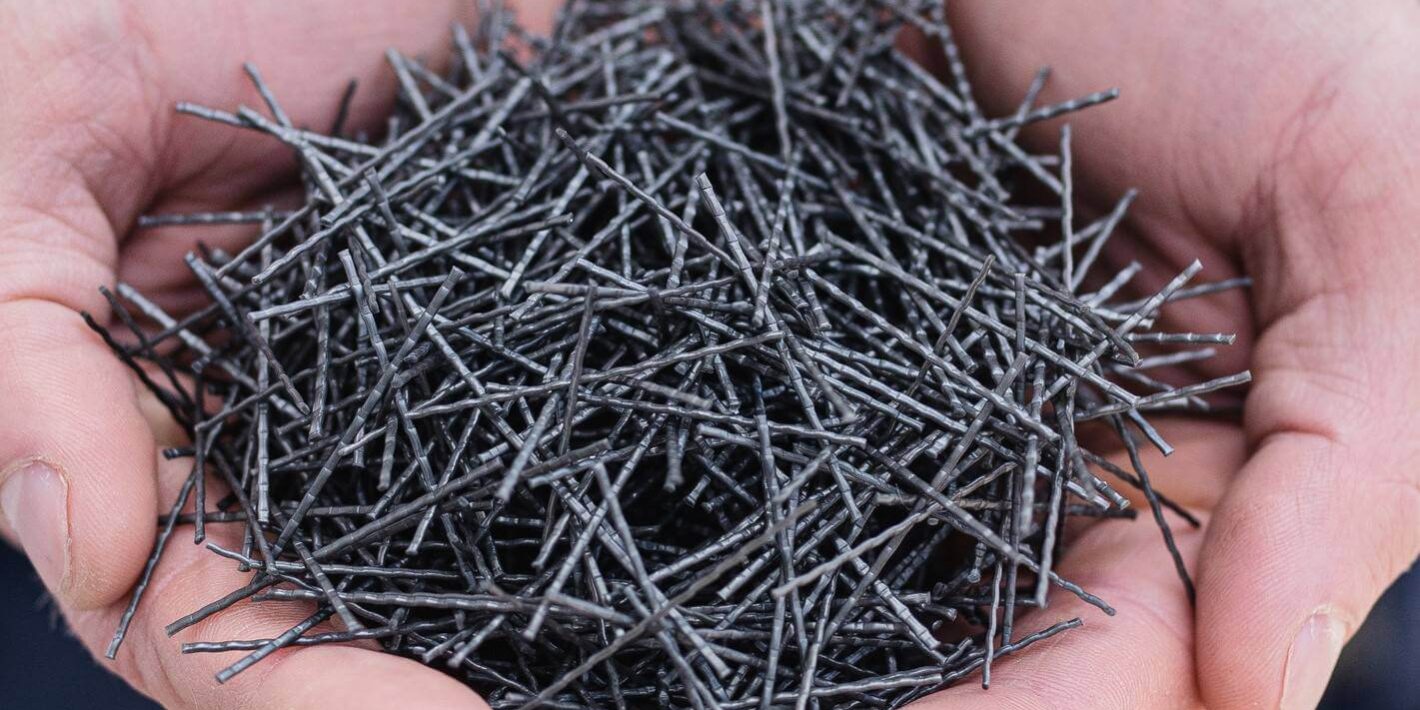
Everything You Need to Know About Fiber-Reinforced Concrete – From a User’s Perspective
Table of Contents
1. Why Is Fiber-Reinforced Concrete Revolutionary?
Concreting Is Not Rocket Science – But the Rules Are Relatively Simple
If you’ve ever tried pouring concrete yourself, you know how quickly the enthusiasm can disappear.
Wheelbarrows full of aggregate, heavy reinforcing mesh, endless mixing, and the eternal question: “Is it thick enough?”
Then, when everything is finally finished, you wake up the next morning to find cracks on the surface of your fresh concrete.
Most people simply shrug and say: “That’s just how concrete is.”
But it doesn’t have to be that way.
A Story Many People Can Relate To
When I first started concreting my yard, I thought I knew everything. Everyone thinks they understand football and construction. I don’t know much about football, but I thought I understood construction. At that time, I had never even heard of fiber-reinforced concrete.
I ordered 14 tons of aggregate, bought 70 square meters of reinforcing mesh, and spent the entire day carrying and assembling steel reinforcement.
The mesh had to be tied together and supported. As we walked on it during the concrete pour, it shifted, bent, and in some places almost became visible near the surface.
The next morning there were small cracks. One year later, the concrete already looked pretty bad.
Five years later, I started over again – only this time without reinforcing mesh.
That was when I discovered fiber-reinforced concrete and structural macrofibers. The whole concreting process felt as if someone had switched off the “pain and hassle” button.
Concrete That Protects Itself From Damage
The concept behind fiber-reinforced concrete is simple: small, high-strength fibers are mixed into the concrete, creating reinforcement that connects the structure in every direction.
These fibers perform the job traditionally done by reinforcing mesh – they control cracks, they do not rust, and they do not need to be supported like steel reinforcement. And you don’t have to carry them around either.
For ground-supported concrete slabs, they provide the same structural benefit, just in a much simpler way.
Why Is This Revolutionary?
- because it eliminates the need for reinforcing mesh, bending steel, and heavy lifting;
- because it does not rust, so it will not weaken the concrete years later;
- because it is a faster, more cost-effective, and cleaner technology;
- and because anyone can use it today, even for residential concrete projects.
Fiber-reinforced concrete is not a new invention. It has simply been hidden behind the walls of industrial construction for decades.
Today, however, it is available to anyone who wants to take construction into their own hands.
What Is This Guide About?
This guide is not an advertisement, but a practical roadmap explaining how fiber-reinforced concrete works, how much it costs, when it should be used, and when it should not.
You’ll learn how to mix it step by step, even at home.
If your goal is a durable, crack-resistant concrete surface, the following chapters will provide all the answers you need.
2. What Is Fiber-Reinforced Concrete and Why Is It Becoming Popular Now?
Concrete Is Strong on Its Own – But Very Brittle
Concrete is almost unbeatable in compression, but as soon as it is exposed to bending or tensile forces, it can crack easily.
This is why reinforced concrete was invented: concrete carries the compressive load, while steel reinforcement carries the tensile load and helps hold the concrete together when cracks appear.
The problem is that steel is heavy, corrodes over time, and does not work throughout the entire cross-section of the concrete. The situation becomes even worse when it is not placed in the correct position within the concrete.
The Principle of Fiber-Reinforced Concrete
Fiber-reinforced concrete, on the other hand, gains an internal framework from tens of thousands of tiny fibers that strengthen the structure in every direction.
They are not a separate layer or an insert. They become part of the concrete itself. They are present in every cubic centimeter and work together with the material.
Just as carbon-fiber composites revolutionized the automotive industry, macrofibers are changing the way concrete is reinforced.
These are modern composite materials.
How Does Fiber Reinforcement Work?
During the curing process, the fibers bond to the cement matrix. When fiber-reinforced concrete is subjected to tensile stress and a crack begins to open, the fibers bridge the crack and take over part of the load.
This prevents cracks from spreading further.
The fibers do not work like armor. Instead, they act as an internal reinforcement network.
Much like a piece of fabric that keeps cracked plaster from falling apart.
What Types of Fibers Are We Talking About?
Fiber-reinforced concrete is not a single material, but an entire category.
This category includes:
- Microfibers – thin, short fibers that prevent hairline cracks caused by shrinkage.
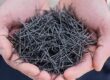
- Macrofibers – longer, thicker fibers that also perform a structural role and can replace traditional reinforcement.
- Steel Fibers – heavier fibers that may corrode and are mainly used in industrial applications.
- Glass Fibers – lightweight but brittle fibers that are generally not intended for structural reinforcement.
The ArmoTec and PolyMesh products distributed by Beton Booster are both structural macrofibers, meaning they are suitable for replacing welded wire mesh reinforcement.
The FiberMix microfiber, on the other hand, is designed to control surface cracking.
Why Is It Better That the Fibers Are Distributed Throughout the Concrete Instead of Being Only at the Top or Bottom?
In most residential concrete projects, welded wire mesh is used as secondary reinforcement to reduce crack widths.
Reinforcing mesh always strengthens the concrete in a single plane.
If that plane is not in the correct position, the embedded steel can do more harm than good. In many cases it ends up at the bottom of the slab, or even worse, too close to the surface.
Macrofibers, by contrast, provide three-dimensional reinforcement. Fiber-reinforced concrete contains fibers throughout the entire structure, allowing it to distribute stresses evenly.
The fibers do not bend, shift, or rust – they simply work.
Fiber-Reinforced Concrete Is Not an Experiment – It Is a Proven Technology
Fiber reinforcement is not new.
It has been used for decades in industrial floors, tunnels, and tramway tracks,
and today every major concrete plant is capable of producing this type of concrete.
The difference is that fiber-reinforced concrete technology is now available for residential projects as well, whether you are building a garage floor, driveway, or patio.
In One Sentence
Fiber-reinforced concrete provides the same load-bearing performance as traditional reinforced concrete, but faster, simpler, and with a longer service life.
Order Now
3. The History of Fiber Reinforcement – From Ancient Adobe Bricks to Airports
The concept of fiber reinforcement is much older than concrete itself. Even in ancient times, people recognized that materials could be made more durable by adding fibers. Straw, animal hair, and plant fibers were mixed into adobe bricks to prevent cracking during drying. The principle has remained the same ever since – only the materials have evolved.
🔹 1874 – The First Steel Fiber Concrete Patent
By the late 19th century, engineers were already experimenting with mixing steel fibers into concrete. The idea worked: flexural strength improved, and cracks remained smaller. However, steel fibers were heavy, susceptible to corrosion, and difficult to process.
🔹 The 1960s – The Plastic Revolution
As the chemical industry advanced, lightweight, corrosion-resistant synthetic materials became available. Polypropylene opened up entirely new possibilities for the concrete industry.
The first documented use of polypropylene-based structural macrofibers in fiber-reinforced concrete dates back to 1966, in research conducted by the U.S. Army Corps of Engineers.
The technical report analyzed the behavior of polypropylene fiber-reinforced concrete under blast loading conditions. The experiments demonstrated that fiber-reinforced concrete responded much more flexibly to dynamic loads and did not fail suddenly like conventional concrete.
This was the first scientifically documented proof that synthetic macrofibers could serve not only as crack-control fibers, but also as genuine structural reinforcement.
⚙️ The 2000s – Industrial Breakthrough
At the beginning of the 21st century, structural macrofibers became widely adopted throughout the construction industry. Logistics centers, factories, warehouse floors, and tunnels were increasingly built using fiber-reinforced concrete. Contractors worked faster, project costs were reduced, and concrete floors became more durable. Macrofiber-reinforced concrete was no longer a supplementary technology – it had become a new industrial standard.
Hungarian Example – Nagyerdei Stadium, Debrecen
In the precast reinforced concrete grandstands of the stadium, the traditional shear reinforcement was completely replaced with structural macrofibers (BarChip). This was one of the first major Hungarian construction projects where fibers were used not as a supplement, but as a primary load-bearing reinforcement element. The result was lighter, corrosion-free concrete with a longer service life.
🔹 From 2020 Onward – The Technology Becomes Available for Home Projects
Beton Booster introduced fiber reinforcement to residential concrete construction not only in Hungary, but now in nine additional European countries as well. Today, fiber-reinforced concrete is accessible to everyone.
Structural macrofibers such as ArmoTec are available in small packaging sizes and can be added to virtually any concrete mix. The same technology used in airports and industrial floors can now be used in your own garage, driveway, or patio.
💡 Summary
The development of fiber reinforcement is the result of more than a century of innovation:
- In ancient times, adobe bricks were reinforced with straw.
- In the 19th century, steel fibers appeared.
- In 1966, the U.S. Army was already experimenting with polypropylene fibers.
- By the 2000s, fiber reinforcement had become mainstream in industrial construction.
- Since 2020, it has been available to anyone through Beton Booster, with fast delivery and easy application.
Today, this technology is no longer reserved for engineers and large construction projects. Homeowners can benefit from the same innovation using simple bagged products, mixed on-site, without reinforcing mesh.
4. How Do Structural Macrofibers Work?
Concrete is exceptionally strong in compression, but much weaker when subjected to bending and tensile forces. Whenever a concrete slab is exposed to loads — such as vehicle traffic, thermal expansion, or freeze-thaw cycles — some areas are placed under compression while others experience tension. This is when cracks begin to form.
At this stage, the concrete has not yet failed, but tiny cracks appear, often too small to be seen with the naked eye. Over time, these cracks continue to grow unless something stops them.
The Limitations of Traditional Reinforcement
Traditional steel reinforcement absorbs tensile stresses within a specific plane of the concrete. If the reinforcement mesh ends up too close to the bottom or top surface of the slab, it is no longer working where it should. Instead, it becomes a potential point of corrosion.
Once a crack forms, it can continue to propagate freely until the structure gradually begins to weaken. Moisture penetrates through the cracks, the steel starts to corrode, and the deterioration process accelerates.
🔹 Structural Macrofibers Work Differently
Macrofibers are not located only at the bottom or top of the slab — they are distributed throughout the concrete itself. Imagine tens of thousands of tiny anchors connecting the particles of concrete in every direction.
As the concrete cures, the fibers become embedded within the cement matrix and develop a strong bond with it. This bond is enhanced by the textured or embossed surface design of structural macrofibers.
When the concrete is placed under tension and a crack begins to form, the fibers bridge the crack and absorb part of the tensile force.
This Is the Moment That Changes Everything
In conventional concrete: the crack gradually widens and spreads.
In macrofiber-reinforced concrete: the fibers hold the crack together, distribute the stress, and prevent structural failure.
🔹 How Do the Fibers Work?
- Bonding – The fiber surface is embossed or textured to achieve maximum grip within the concrete.
- Crack Bridging – When a crack develops, the fibers continue to connect both sides of the crack.
- Energy Absorption – The fibers prevent sudden crack growth by absorbing and redistributing stresses in a controlled manner.
- Durability – Crack propagation is stopped, and the concrete structure remains stable over the long term.
Three-Dimensional Reinforcement
One of the greatest advantages of structural macrofibers is that they do not work in a single direction like welded wire mesh. Instead, they reinforce the entire volume of the concrete.
As a result, stresses are distributed more evenly throughout the slab. Cracks may still occur, but they remain small and tightly controlled. They do not merge into larger cracks and do not compromise the structural integrity of the concrete.
Corrosion-Free Performance
Structural macrofibers are made from polypropylene, which means they do not corrode, rust, or create internal expansion stresses within the concrete.
Even in wet environments and after repeated freeze-thaw cycles, they maintain their flexibility and performance.
The Result: Stronger, Smarter, More Crack-Resistant Concrete
Concrete reinforced with structural macrofibers behaves in a way that is both stronger and more intelligent:
- it prevents cracks from growing larger,
- it preserves the integrity of the concrete structure over the long term,
- it eliminates the need for cutting, lifting, tying, or welding reinforcement mesh,
- and it achieves all of this at a lower overall cost.
5. What Types of Concrete Fibers Exist, and What Are They Used For?
The European standard EN 14889 clearly distinguishes between microfibers and macrofibers used in concrete.
This distinction is important not only because of their size, but also because they perform completely different functions within the concrete.
Microfibers – Guardians Against Surface Cracks
Microfibers are hair-thin and short – usually 6–12 mm long.
Their purpose is not structural reinforcement, but the prevention of small cracks caused by shrinkage.
What Are They Used For?
- they prevent hairline cracks during the curing stage of fresh concrete,
- they increase the surface density of the concrete,
- they improve frost resistance and water tightness,
- they help prevent concrete spalling under fire or heat exposure.
💡 Important: microfibers do not replace reinforcement and do not take over bending or tensile stresses in concrete.
However, they are an ideal addition when you want a more durable, crack-resistant surface.
Macrofibers – Structural Reinforcement Fibers
Macrofibers belong to a completely different category.
They are typically 40–60 mm long, and their thickness is several times greater than that of microfibers, with a minimum diameter of 0.3 mm.
According to the standard, these fibers are referred to as structural synthetic fibers, because they are capable of replacing traditional steel mesh reinforcement.
What Do They Do Exactly?
- they bridge cracks and continue to transfer loads,
- they distribute stresses that occur within the concrete,
- they improve flexural strength,
- they are corrosion-free, which extends the service life of the concrete.
💡 These fibers can also be designed and specified by a structural engineer.
This means that structural macrofibers are not just an additive, but a structural-level reinforcement solution.
The Three Main Beton Booster Fiber Types
ArmoTec – The All-Round Structural Macrofiber
- Polypropylene-based structural macrofiber, 40 mm long and 0.8 mm thick.
- Developed for ground-supported, slab-type concrete structures.
- Replaces steel mesh reinforcement in garages, driveways, floor slabs, and patios.
- Easy to mix, does not settle, and does not negatively affect concrete workability.
Typical dosage: generally around 3–4 kg/m³, depending on load and slab thickness.
PolyMesh – For Higher Load Requirements
- Twisted synthetic macrofiber that provides even stronger bonding within the cement matrix.
- Ideal for industrial floors, logistics halls, and surfaces exposed to heavy machinery traffic.
- Higher energy absorption, excellent crack bridging, and strong dimensional stability.
Typical dosage: 2–4 kg/m³.
FiberMix – Against Surface Cracks
- Fine microfiber additive that prevents hairline cracks caused by early shrinkage.
- Recommended mainly for indoor screeds, floors, and visually refined concrete surfaces.
- Can be combined with ArmoTec or PolyMesh, making the concrete both crack-resistant and structurally reinforced.
Typical dosage: 0.6–1 kg/m³.
💡 Summary
- Microfibers prevent surface cracks.
- Macrofibers provide structural reinforcement and can replace traditional reinforcement.
- ArmoTec and PolyMesh are the two main structural fiber types.
- FiberMix is the perfect complementary fiber for a crack-resistant surface.
When used together, these fibers make the concrete flexible, durable, and reinforced throughout its entire cross-section – exactly as modern standards require.
6. Dosage and Mixing – Exactly How Much Fiber Do You Need per Cubic Meter of Concrete?
One of the most important characteristics of structural macrofibers is that there is no such thing as “one handful works for everything.”
The ideal dosage always depends on the thickness of the concrete slab and the loads the structure will be required to carry.
🔹 The greater the load, the more fiber is required – but there is always a practical limit.
Too little fiber will not provide sufficient reinforcement, while too much fiber can make mixing more difficult and unnecessarily increase costs.
The Basis of Dosage – Think in Cubic Meters
Macrofiber dosage is always specified per cubic meter (m³) of concrete.
This is important because the reference point in concrete construction is the total volume of the concrete mix – not the bag, not the bucket, but the entire quantity of concrete.
💡 One cubic meter of concrete is approximately equal to a 10 m² slab with a thickness of 10 cm (4 inches).
This makes calculations simple. For example, a 20 m² garage floor poured at 10 cm thickness requires approximately 2 m³ of concrete, and the fiber dosage must be calculated accordingly.
Recommended Dosage Range
The following guidelines are based on Beton Booster’s engineering calculations and real-world application experience:
- 2.5–3 kg/m³ – sidewalks, indoor floor slabs, and light-duty applications.
- 3–4 kg/m³ – garages, driveways, and outdoor residential concrete surfaces.
- 5–6 kg/m³ – heavy-duty applications such as stairs, utility pits, and swimming pools.
For exact values, refer to the dosage table below, which includes typical applications and their recommended fiber quantities.
How to Calculate the Required Amount for Small-Batch Mixing
The easiest method is to determine how many liters of concrete your mixer produces in one batch.
For example, if your mixer produces 60 liters of concrete per batch:
1 cubic meter = 1,000 liters
1,000 ÷ 60 = approximately 17 batches per m³
If the required dosage is 3 kg/m³, then:
3 kg ÷ 17 ≈ 175 grams of fiber per batch.
You can easily weigh this amount using a kitchen scale and add it directly to the concrete mixer.
💡 If you add the fibers to an already mixed batch, allow the mixer to run for at least 1–2 minutes to ensure even distribution throughout the concrete.
Ready-Mix Concrete Makes It Even Easier
If you order concrete from a ready-mix plant, simply specify how many kilograms per cubic meter of ArmoTec or PolyMesh fiber you want included in the mix.
The concrete plant will perform the mixing process for you.
If the fibers are added on-site directly into the mixer truck drum, the drum should rotate at full speed for approximately one minute per cubic meter of concrete to ensure perfect fiber distribution.
Dosage Table
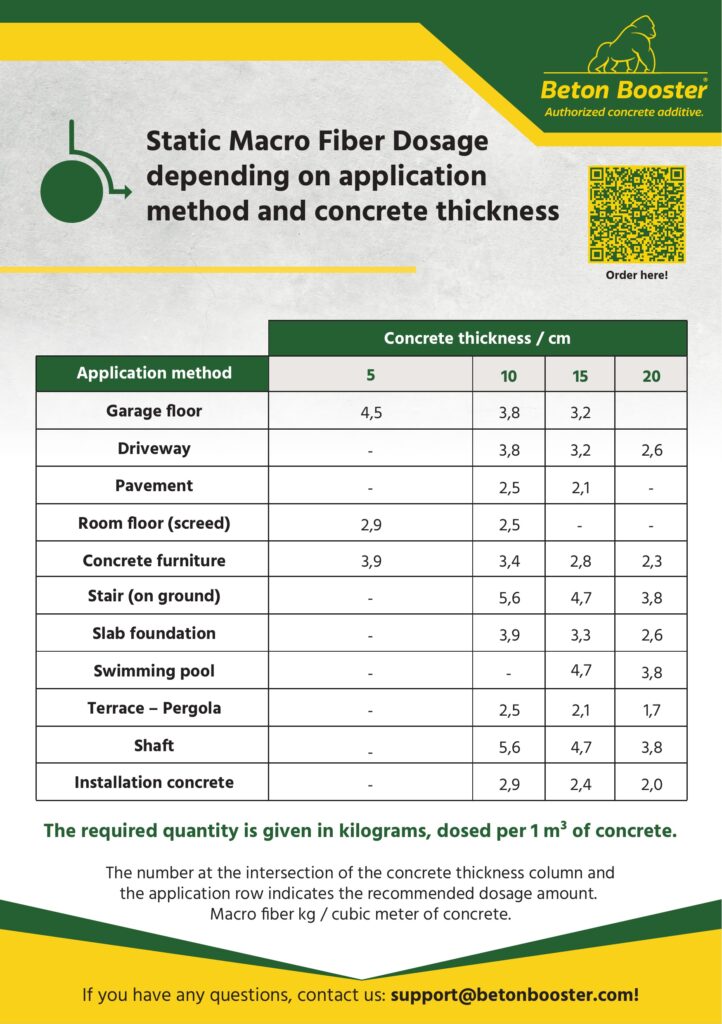
Summary
Correct fiber dosage determines not only the strength of the concrete, but also its crack resistance and long-term durability.
The Beton Booster system is based on real-world application experience and engineering practice, so you can confidently rely on the dosage values shown in the table.
If you are uncertain, it is generally better to choose the higher dosage. A few extra dollars’ worth of fiber can provide many additional years of crack-resistant concrete performance.
7. Price Comparison – How Much Can You Save with Macrofibers Compared to Steel Reinforcement?
Now that you understand how structural macrofibers work, it’s time for the comparison that matters most — real-world costs.
Let’s look at a practical example: a 10 × 10 meter (100 m²) driveway with a 10 cm thick concrete slab.
The Traditional Solution: Welded Wire Mesh Reinforcement
Required quantity: 8 sheets of Q188A welded wire mesh, 6 mm diameter, with a sheet size of 6.0 × 2.3 meters.
- Material cost: €560
- Delivery: approximately €200
- Installation, tying wire, spacers, etc.: approximately €100
Total cost: €860
The Macrofiber Solution: Using ArmoTec
Required quantity: 40 kg of structural macrofiber
- Unit price: €9.99/kg
- Total fiber cost: €399.60
- Delivery: Free
- Installation, tying wire, spacers: €0
Total cost: €399.60
Savings and Key Takeaways
Total savings compared to traditional reinforcement: €461
This is money that can be spent on other parts of the project — or simply stay in your pocket.
(The above comparison does not include the cost of the concrete itself.)
What Can We Learn from This?
- The macrofiber solution is not just a theoretical alternative — it can deliver significant real-world savings.
- There is no need for labor-intensive reinforcement installation, such as transporting, cutting, tying, placing mesh, or using spacers, which reduces costs even further.
- For a 100 m² driveway, only 40 kg of ArmoTec is needed instead of 8 large sheets of welded wire mesh.
- The investment pays for itself quickly — often within the first one or two projects.
8. Environmental Benefits – When Plastic Can Actually Be Greener
Many people are surprised when they hear that a plastic-based fiber can be more environmentally friendly than steel. And not just by a small margin.
Let me explain. The logic is simple.
🔹 Its environmental footprint is already 70% lower during production compared to steel manufacturing.
The production of polypropylene macrofibers requires significantly less energy, which means far less carbon dioxide is released into the atmosphere.
The Quantities Speak for Themselves
Let’s take an average 10 × 10 meter concrete slab with a thickness of 10 cm again.
At this size, traditional reinforcement would require approximately 500 kg of steel.
If the same slab is made with structural macrofibers, 40 kg of ArmoTec is enough to replace the steel reinforcement.
This means more than a tenfold reduction in weight – and that matters not only during production:
Transport: 40 kg can be delivered by a courier, while 500 kg of steel requires a truck. The difference in emissions is already significant at this stage.
Installation: there is no cutting, bending, or welding – which means zero additional energy use on site.
🔧 Demolition: separating steel from reinforced concrete is an energy-intensive and noisy process, while macrofiber-reinforced concrete can simply be reused as crushed concrete.
Durability = Sustainability
Macrofibers do not rust and do not break the concrete apart from the inside, which greatly increases the service life of the structure.
Fewer repairs, less material use, and less transport all mean a lower environmental burden.
Summary
- 70% lower environmental footprint already during production,
- more than tenfold weight reduction compared to steel,
- minimal transport and installation emissions,
- longer service life, less demolition, and less waste.
Macrofibers therefore make concrete construction not only simpler and more affordable, but also genuinely greener – even if it may seem surprising at first that a plastic-based product can do that.
9. Questions Every Customer Asks – All the Answers in One Place
Since launching Beton Booster, we have received thousands of questions about fiber-reinforced concrete: how to mix it, where it should be used, when it cannot replace steel reinforcement, and how much fiber is needed for a specific application.
We didn’t let those questions go to waste.
We created a detailed and continuously expanding FAQ section where you can find answers to the most common questions — from the simplest practical topics to the most technical engineering details.
You can access it here:
betonbooster.com/faq
There you will find detailed information about:
- which structures are suitable for replacing steel reinforcement with macrofibers,
- how to properly mix fibers into concrete,
- the testing reports, certifications, and technical documentation available for our products,
- the most important things to pay attention to during installation,
- and many more questions and answers collected from real-world projects.
💬 The FAQ section is not a marketing brochure. It is a collection of practical experience and lessons learned from hundreds of concrete projects, organized in one place to help you make informed decisions.
10. Real-World Examples and Customer Experiences
It is easy to talk about the benefits of fiber-reinforced concrete — but it means much more when the story is told by people who have already used it.
Over the past few years, thousands of concrete projects have been completed using our fibers, and we have received a large number of customer reviews and real-world experiences.
We are highlighting two of them here because they clearly show the difference structural macrofibers can make compared to traditional welded wire mesh.
“At first, the contractor argued in favor of using steel reinforcement. But the structural engineer’s reasoning, the lower cost compared to steel, and the fact that we could avoid all the heavy work involved in transporting, unloading, bending, and placing reinforcement eventually convinced him that macrofibers were the better choice.
The fibers mixed perfectly into the concrete under the road, and pumping the concrete into the formwork also went smoothly.
I saved a significant amount of money — three to four times the cost of the macrofibers themselves.
The manager of the concrete plant told me they already use macrofiber reinforcement regularly and reassured me about its durability.
I can only recommend it to anyone who is building.”
– Koppány Karsay, concrete slab construction for a family home
“Concreting with macrofibers was much easier and faster than working with welded wire mesh.
I had to transport the reinforcing mesh from the building materials yard rolled up, and once I got it home, I could barely straighten it enough to use it.
After straightening it, I still had to support it in several places so the concrete could flow underneath properly.
With macrofibers, all of these problems disappeared.
I simply added 150 grams of fiber to each batch in just a few movements, which corresponds to a dosage of 3 kg/m³.
After two minutes of mixing, the super-strong concrete was ready. It really doesn’t get any simpler than this.”
– Adrián Benyák, garage floor and walkway concrete project
These are not just case studies. They are real experiences from people who were tired of struggling with welded wire mesh and decided to try a simpler, more modern solution.
The common thread in these stories is always the same:
faster work, less hassle, and a crack-resistant result.
11. Tips and Mistakes Worth Avoiding
Using fiber-reinforced concrete is not complicated, but as with any technology, small details can make a big difference in the final result.
The points below are based on feedback we have received from our customers over the past few years, combined with decades of professional experience.
🔹 1. Do Not Use Too Much Water
Concrete becomes strong when it is dense and compact. If you mix it too wet, its strength drops significantly.
Good concrete does not flow like soup. It spreads slowly.
If you want concrete that is easier to work with, use Vip-Rex SF superplasticizer. Half the water, self-compacting concrete.
🔹 2. Measure the Quantities Accurately
The correct performance of concrete depends primarily on accurate dosing.
The strength of structural macrofibers also depends on correct dosage.
Too little fiber will not provide enough reinforcement, while too much fiber makes placement more difficult.
Always measure the required quantity before mixing – even a simple kitchen scale is enough.
🔹 3. Do Not Mix for Too Short a Time
The fibers need time to distribute evenly throughout the concrete.
Mix at full speed for at least 1–2 minutes, whether you are using a small concrete mixer or a ready-mix truck.
The fibers are properly distributed when the concrete has a uniform consistency everywhere and the fibers do not form clumps.
🔹 4. Steel Reinforcement Cannot Be Replaced in Every Structure
Structural macrofibers are designed for slab-like concrete structures supported by the ground.
For columns, beams, ring beams, or suspended slabs, traditional steel reinforcement is still required.
In these structures, fibers cannot replace reinforcement designed to carry directed tensile forces.
🔹 5. Do Not Skip Curing
The surface of fresh concrete should always be kept moist for at least one week.
Macrofibers help prevent cracking, but if the concrete dries out too quickly, internal stresses develop within the material.
Water curing is the simplest and most effective way to make sure the concrete remains truly durable.
💡 Summary
These are small but essential details.
Properly mixed and properly cured macrofiber-reinforced concrete is not only strong, but can remain crack-resistant for many years.
Beton Booster guides, mixing advice, and infographics are all designed to help you achieve this result in real-world projects.
12. The Future of Concrete – Where Is Development Heading?
The world of concrete is still undergoing a major transformation.
Just as carbon-fiber bodies have appeared in the automotive industry, lightweight, corrosion-free, high-strength composite materials are gaining an increasingly important role in construction as well.
Structural macrofibers are one of the key elements of this development.
🔹 Smarter and Smarter Materials
The goal of modern development is to make concrete not only strong, but also self-healing and durable.
Today, there are already transparent glass concretes, as well as self-healing “smart” concretes that are capable of sealing microcracks on their own.
Tiny capsules are mixed into the concrete structure, which activate when they come into contact with water and fill the crack before it can spread further.
This technology is still under development, but it clearly shows where the industry is heading:
the future of concrete is moving toward sustainability and self-healing performance.
🔹 Fibers in Every Form
Structural macrofibers can now be made from several different materials.
In addition to polypropylene, special polymer and hybrid fibers have also appeared, each optimized for different types of stress and load requirements.
These developments all help concrete become more resistant to cracking, freeze-thaw damage, and long-term loading.
🔹 Sustainability in Construction
The construction industry is one of the world’s largest users of raw materials and, unfortunately, one of its most polluting sectors.
Every development that simplifies construction and reduces material demand creates real environmental benefits.
Structural macrofibers do exactly that:
less steel, less transport, lower energy use, and longer-lasting structures.
💡 Summary
The future of concrete is also about innovation. Traditional technologies are becoming outdated.
We are talking about solutions that allow construction to be carried out with less labor, lower environmental impact, and greater safety.
Fiber reinforcement is part of this direction, and all signs indicate that it will become one of the key construction technologies of the next decade.
13. Summary – What Should You Remember?
Fiber-reinforced concrete is not a new trend. It is the logical next step after traditional reinforced concrete.
It is a technology that makes concreting simpler, faster, and more durable – both in industrial construction and at home.
The role of structural macrofibers is to reinforce concrete in every direction.
They do not only help prevent cracking, but also provide real structural support and replace steel reinforcement in applications where traditional reinforcement is not structurally essential.
🔹 The Most Important Benefits in Brief
- Simpler installation: no cutting, bending, or supporting reinforcement mesh.
- Faster work: once the fibers are mixed in, the concrete is already reinforced.
- More durable structure: the fibers do not rust, and the service life is longer.
- More cost-effective solution: compared to traditional reinforcement, cost savings can reach up to 40–50%.
- Environmentally conscious choice: the environmental footprint is significantly lower during both production and transport.
What Is Worth Remembering
Fiber-reinforced concrete is a more modern solution than traditional steel reinforcement in many applications, but the key to success is the same as always: correct mixing, accurate dosage, and careful curing.
When these are done properly, the concrete will not only be strong, but also durable and crack-resistant.
Useful Tools and Guides
If you need further help:
- 📊 Concrete Calculator – calculate exactly how much fiber you need,
- 📘 Mixing Guide – follow the correct process step by step,
- ❓ FAQ – find answers to all your most common questions.
Final Thought
Fiber reinforcement is not only a technology, but also a shift in mindset.
Less material, less work, but greater safety and a longer service life.
This is the mission of Beton Booster: to make concreting simpler, more affordable, and more durable – for everyone.